Kinjal Gala — Trauma-Informed Counsellor & Emotional Intelligence Educator
What you're feeling makes sense. Let's understand why.
You may be managing well on the outside while carrying something much harder underneath. Kinjal works with individuals who appear capable, successful and "fine" — yet may be experiencing anxiety, emotional overwhelm, burnout, overthinking, low self-worth, difficulty with boundaries or patterns shaped by earlier experiences. She also works with schools to build emotional intelligence as a structured part of students' developmental journey.

Who this is for
You may look like you have it together. That's often exactly the problem.
You function. You show up. You take responsibility. And yet, somewhere underneath, you may feel exhausted, overwhelmed or disconnected from yourself. You may be experiencing:
You don't have to wait until things become unbearable to seek support.

Individual counselling
A structured space to understand what's happening beneath the surface
Counselling with Kinjal isn't about being told what to feel or being given a quick fix. It is a structured, compassionate process of understanding your emotional experiences, recognising patterns, developing awareness and building healthier ways of responding — at a pace that respects where you are.
Depending on your needs, sessions may integrate:
Online sessions are available wherever you are. In-person sessions are available in Borivali West, Mumbai.
What you can expect
Begin by understanding what is bringing you to counselling.
Notice emotional triggers, patterns and responses that may have become automatic.
Learn to recognise what is happening within you instead of simply reacting to it.
Build practical ways of regulating emotions, communicating needs and responding differently.
Move towards greater emotional stability, self-trust and awareness in everyday life.
My approach
The same experience can affect two people very differently
What happened matters. But so does how the experience was processed, what we learned from our environment, and the emotional patterns we developed along the way.
Kinjal's approach brings together three important perspectives:
Trauma-informed understanding
Creating a space where your experiences are approached with safety, compassion and without judgement.
Emotional Intelligence
Learning to recognise, understand, regulate and communicate emotions with greater awareness.
Structured emotional work
Moving beyond simply talking about a problem towards understanding patterns, developing practical tools and building sustainable emotional stability.
A few principles guide my work
Experience isn't the whole story
Two people can go through a similar experience and respond very differently. Understanding what happened internally can help us understand the response we see today.
Environment shapes emotional patterns
Our formative experiences often teach us how to respond to emotions, relationships, conflict and ourselves — sometimes without us consciously realising it.
Emotions rarely arrive alone
Anger can coexist with hurt. Guilt can coexist with love. Grief can coexist with relief. Sometimes the first step is simply learning to untangle what you are actually feeling.
Awareness changes the response
Emotions themselves are not the enemy. When we can recognise and understand what is happening within us, we create the possibility of responding differently.
Containment before catharsis
Emotional healing does not have to be dramatic. The first step is creating enough safety and stability to understand what you are experiencing.
Not sure where to start?
Begin with a free 15-minute clarity call
A short, no-pressure conversation to understand what you're going through, whether counselling may be appropriate for you, and how Kinjal might support you. No pressure. No obligation. Just a conversation.
For schools — Grade 1 to Grade 10
Emotional Intelligence Development Program
Building emotionally strong students beyond academics.
A structured Grade 1–10 life-skills curriculum designed to help students progressively develop emotional awareness, self-understanding, resilience, healthy relationships and responsible decision-making.
This is not designed as a one-off motivational workshop. It is a developmental journey that grows with the child.
Designed with the broader vision of holistic development encouraged by NEP 2020.
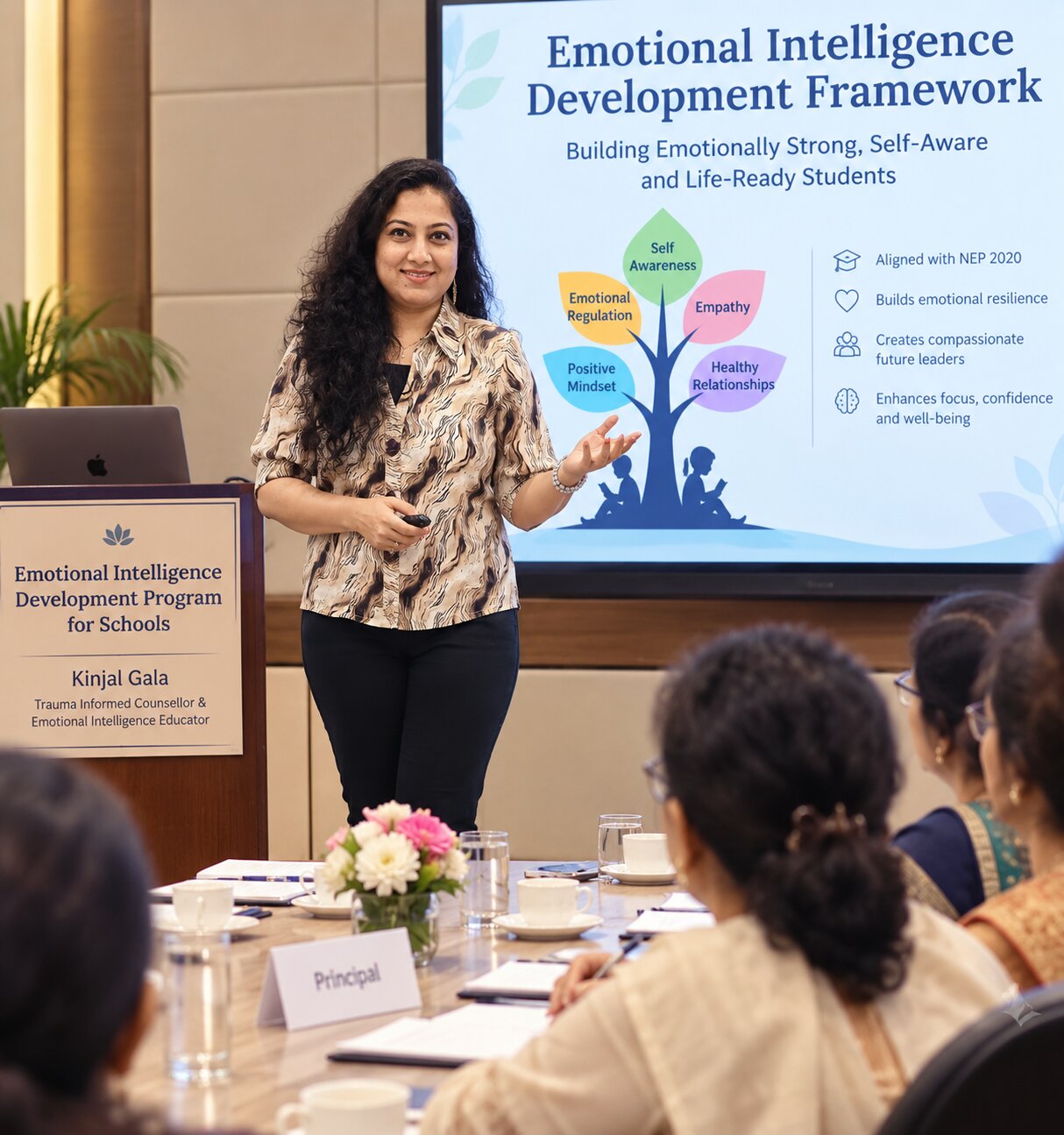
A journey that grows with the child
From Grade 1 to Grade 10
Early Years
Recognising and expressing emotions
Building a basic emotional vocabulary — helping younger students name what they feel and express it in healthy ways.
Middle Years
Self-awareness, relationships and emotional regulation
Developing self-understanding and the ability to navigate friendships, conflict and everyday social situations with more awareness.
Adolescent Years
Self-worth, identity, boundaries and emotional responsibility
Supporting students as they form their sense of identity, take more ownership of their emotional responses, and build resilience for what's ahead.
Grade 10
Emotional maturity, decision-making, resilience and life readiness
Consolidating emotional maturity and decision-making skills that carry students into board exams, higher education and adult life.
The program develops
A developmental journey — not just a workshop. The program is designed to build progressively across school years rather than teaching the same emotional concepts repeatedly at every age. The intention is simple: as children grow academically, they should also grow emotionally.
Invite Kinjal to present the program to your school's leadership team.
Invite Kinjal to Present the Program to Your SchoolIn their words
What people have said after working with Kinjal
From individual counselling
"Kinjal made me feel seen and heard for the first time in years. Her approach helped me find clarity and strength within myself."
"I never thought I could face my addiction, but with her help, I've started a whole new chapter of my life."
"After just a few sessions, I felt like I had found someone who truly heard me. It changed the way I see myself."
"Kinjal helped me find clarity at a time I felt completely lost. Her calm presence and intuitive guidance made me feel safe and understood."
From Emotional Intelligence sessions
"I always struggled to focus while studying and couldn't figure out why. Through my sessions with Kinjal, I realised it was the pressure of exams and marks that was getting in the way. Just understanding that made it so much easier to concentrate again."
"My son used to react instantly whenever he got angry. Now I see him pause for a moment before responding, instead of reacting straightaway. That small pause has made such a difference."
"I used to get angry very quickly, and I'd end up throwing my pencils without even thinking. After the lecture, I felt a lot calmer about it. It was only a one-day workshop though, and honestly, I wish it was something we had regularly at school, not just once."
These reflect experiences from individual counselling sessions and earlier Emotional Intelligence lectures. They speak to Kinjal's approach and teaching, not to outcomes of the Grade 1–10 curriculum, which is newly developed.

About Kinjal
Understanding what happens beneath the behaviour
Kinjal's work grew from a simple, persistent question: why do people respond so differently to the same experience? What happens beneath a reaction that looks calm on the surface? Why does one person move forward while another remains affected by an experience for years? How do emotions, environment and formative experiences shape the way we see ourselves and respond to life?
That curiosity led Kinjal across different fields of study and eventually into counselling, trauma-informed practice and Emotional Intelligence education.
Today, she works with individuals navigating difficult emotions, life transitions and recurring emotional patterns, while also developing structured Emotional Intelligence education for schools.
Her approach is grounded in curiosity rather than judgement: understand first, create awareness, then work towards change.
With Roshan & Chitra
Collaboration
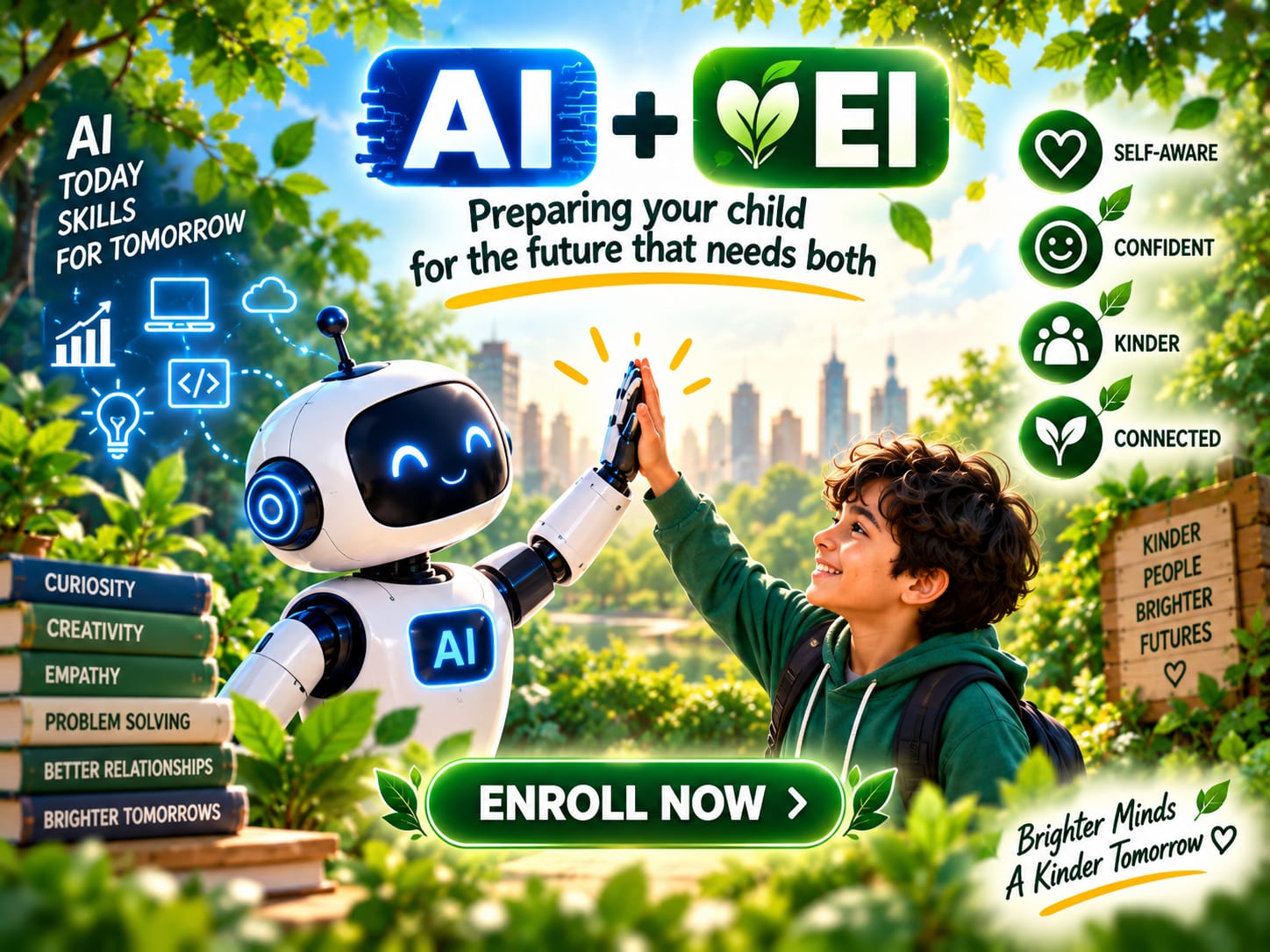
AI × EI — One Powerful Learning Journey
A 4-week interactive program for ages 12–17, bringing together AI literacy with emotional intelligence — run jointly with Chitra Vasvani (AI Generalist).
Enquire on WhatsApp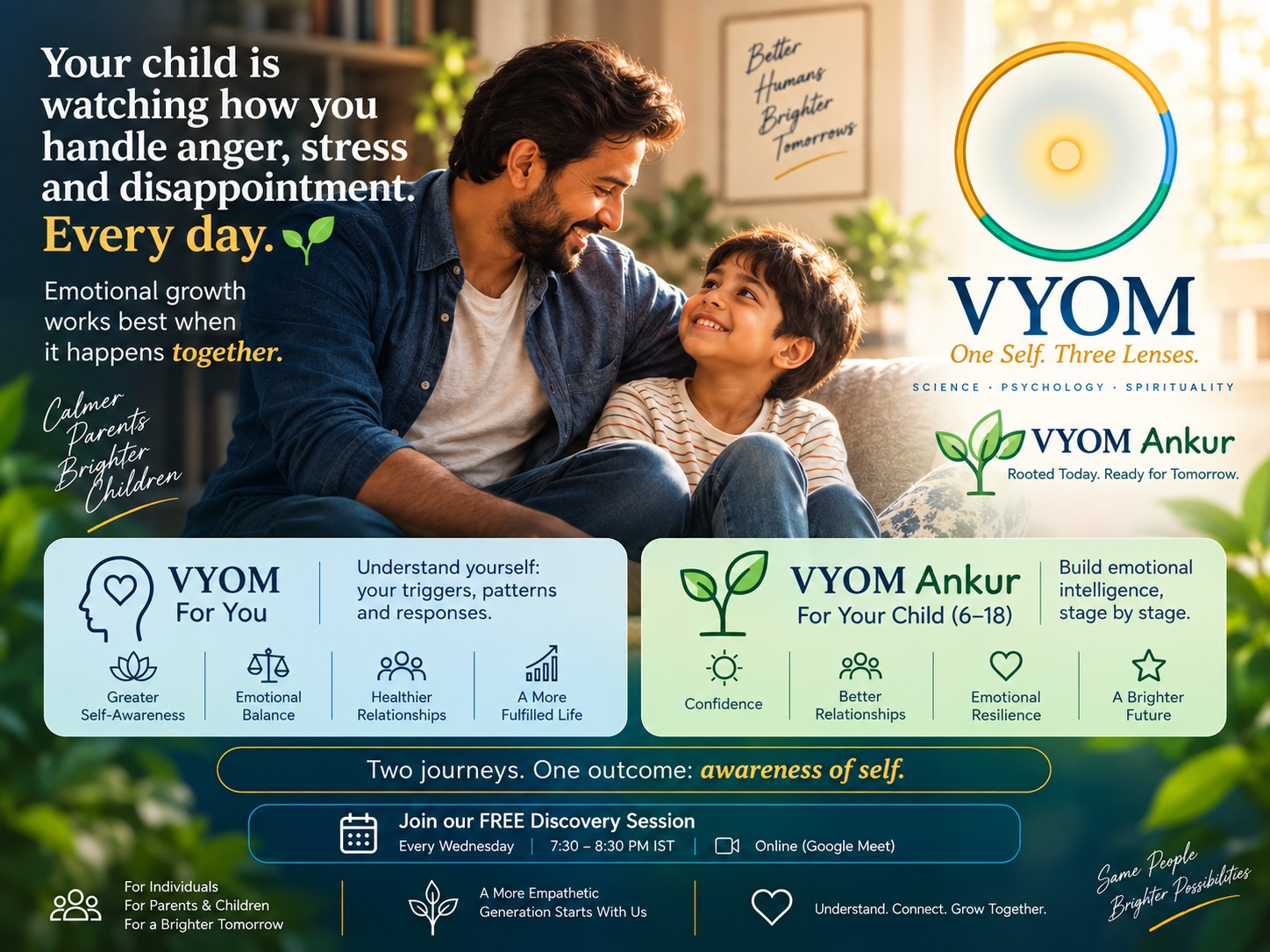
VYOM™ — One Self. Three Lenses.
A collaborative growth program bringing science, psychology and spirituality into one structured path — led by Roshan Dsouza of Wisdom Three, with Kinjal Gala leading VYOM Ankur, its emotional intelligence track for children and teens.
Learn MoreQuestions
Frequently asked questions
Who is counselling for?
Counselling can be helpful for individuals experiencing emotional distress, overwhelm, anxiety, burnout, relationship difficulties, life transitions, low self-worth, boundary difficulties or recurring emotional patterns.
Do I need to have a specific problem to seek counselling?
No. You don't have to wait for a crisis. Sometimes counselling begins simply because you know something doesn't feel right and want to understand yourself better.
What happens in the first session?
The first session is primarily about understanding what brings you to counselling, your current concerns and what kind of support may be appropriate.
Are sessions online or in person?
Both options are available. Online sessions are available wherever you are, and in-person sessions are available in Borivali West, Mumbai.
How can a school explore the Emotional Intelligence Development Program?
School leadership teams can connect with Kinjal for an introductory conversation and presentation of the program.
Get in touch
Let's Start the Conversation
You don't have to figure everything out before reaching out.
For schools
Explore how the Emotional Intelligence Development Program could fit within your school's developmental and life-skills initiatives.
Talk About the School Program